
Kantamanto, Makola and Ghana's second-hand economy
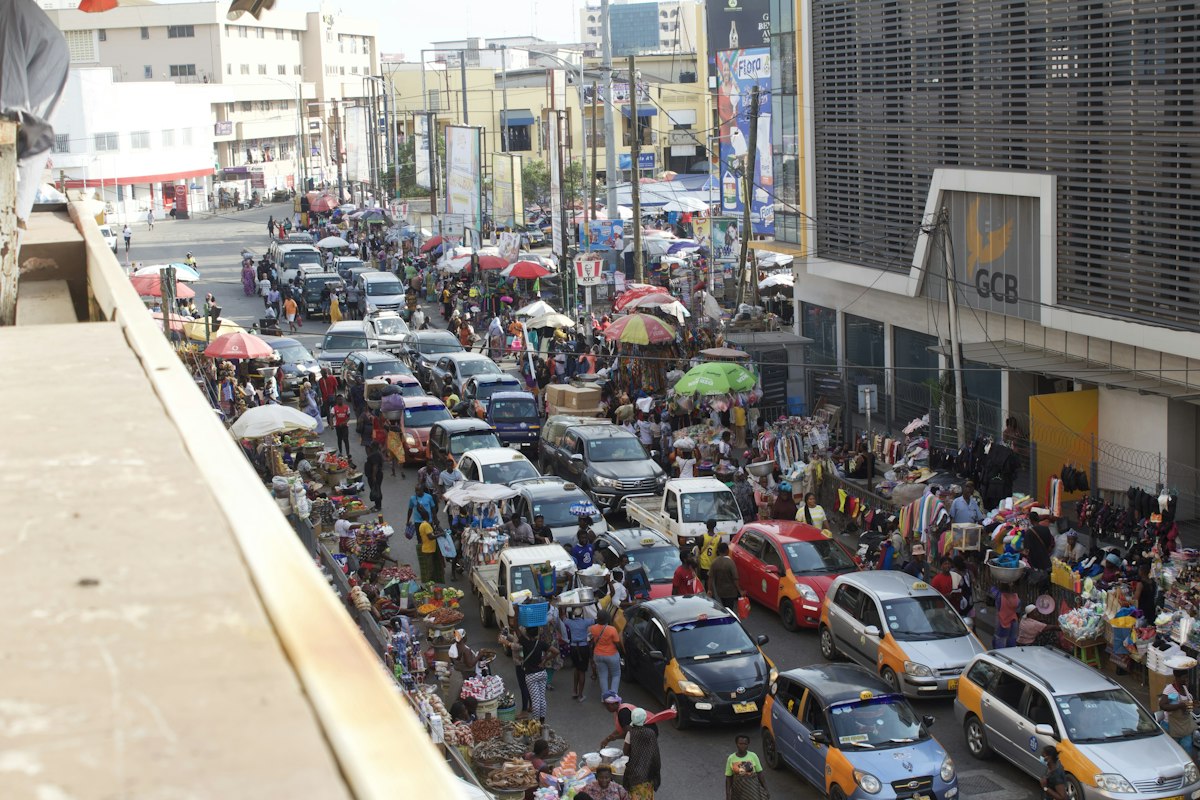
Walk through Kantamanto and the idea that a thing has more than one life is not a philosophy. It is Tuesday.
Ghana has traded, repaired and resold second-hand goods for generations. Kantamanto, Makola and thousands of roadside stalls make up one of the most sophisticated second-hand economies in the world. This post looks at how it works, why it works so well here, and the part of it that no market can profitably serve.
Kantamanto: one of the world's largest second-hand clothing markets
Kantamanto sits in the central business district of Accra, close to Makola. It is one of the largest second-hand clothing markets in West Africa, and among the largest anywhere. According to The Or Foundation, which works in the market, around 15 million used garments arrive every week, and more than 30,000 people depend on it for their living.
The clothes are known in Ghana as obroni wawu — "dead white man's clothes" in Twi — a name from a time when people could not believe anyone would give away clothes this good unless their owner had died.
How the trade works
The clothes arrive in tightly packed bales, mostly from Europe, North America and Asia. Traders buy the bales without seeing inside, so every bale is a gamble: some are full of good, sellable clothes, others are mostly damaged. Around the market, a whole ecosystem supports the trade — head porters, known as kayayei, who carry the heavy bales; tailors and menders who repair, restyle and remake clothes; and retailers across the country who buy from Kantamanto to sell in their own towns.
What cannot be sold becomes waste. That is one reason textile waste has become such a visible problem in Accra's drains and along its coastline, and why our guide on how to donate clothes in Accra starts with where clothes end up.
The 2025 fire
On 2 January 2025, a major fire swept through large sections of Kantamanto, destroying stalls and stock and displacing thousands of traders. The market has been rebuilding since, a reminder of how much of Accra's economy runs through it.
Makola and the trading tradition
Makola, a short walk from Kantamanto, is Accra's best-known market: wholesale and retail, food and hardware, cloth and household goods. It is famous for its traders, and especially its market women, whose networks and knowledge move goods across the country.
Between them, Makola and Kantamanto show something that is easy to overlook: Ghana has never been squeamish about used goods. Buying second-hand, repairing and reselling are ordinary, sensible things to do.
Why second-hand works so well here
- Repair is everywhere. A tailor, cobbler or repairer is never far away, so a used item can almost always be put right. See the repair habit Ghana never lost.
- Value is taken seriously. A good item is a good item, whoever owned it before.
- Networks are strong. Traders, families, churches and WhatsApp groups move things quickly.
Why free is different from cheap
A trader needs margin, and margin needs volume. That works for clothing, phones and furniture sold in quantity.
It does not work for the standing fan in your store room. The effort of selling one household item — photographing it, advertising it, haggling over it, waiting for a buyer who may not turn up — is often worth more than the item would fetch.
So the fan stays in the store room until it goes out with the rubbish. Multiply that by every household, and a huge number of perfectly useful things are lost, not because nobody wants them, but because selling them is not worth the trouble.
Where Givny sits
Givny is not competing with Kantamanto or Makola. It covers the part of the market that nobody can profitably serve: single household items whose resale value is lower than the hassle of selling them.
- One item, one owner, one neighbour
- No price, so no negotiation
- The person who needs it collects it
It is an old idea — things passing from one household to another — without the middleman, and without the effort that makes selling small things not worth it.
Frequently asked questions
What is Kantamanto market?
Kantamanto is a second-hand clothing market in central Accra and one of the largest in West Africa. Traders buy imported bales of used clothes and sell them on to shoppers and retailers across Ghana.
What does obroni wawu mean?
It is Twi for "dead white man's clothes", a common Ghanaian name for imported second-hand clothing.
Where is Kantamanto in Accra?
It is in the central business district of Accra, close to Makola market.
Is Givny a place to buy second-hand goods?
No. Everything on Givny is free. People give away things they no longer need, and people nearby request and collect them.
Have something that is not worth the hassle of selling? List it on Givny and let a neighbour put it to use.
How did this land?
Join the conversation
Sign in to comment. Real names keep this place civil.